Your first electrical tool kit: buy from the list, build with experience
A practical starter checklist and a plan for avoiding unnecessary purchases.
Electrical Helps · Updated September 23, 2026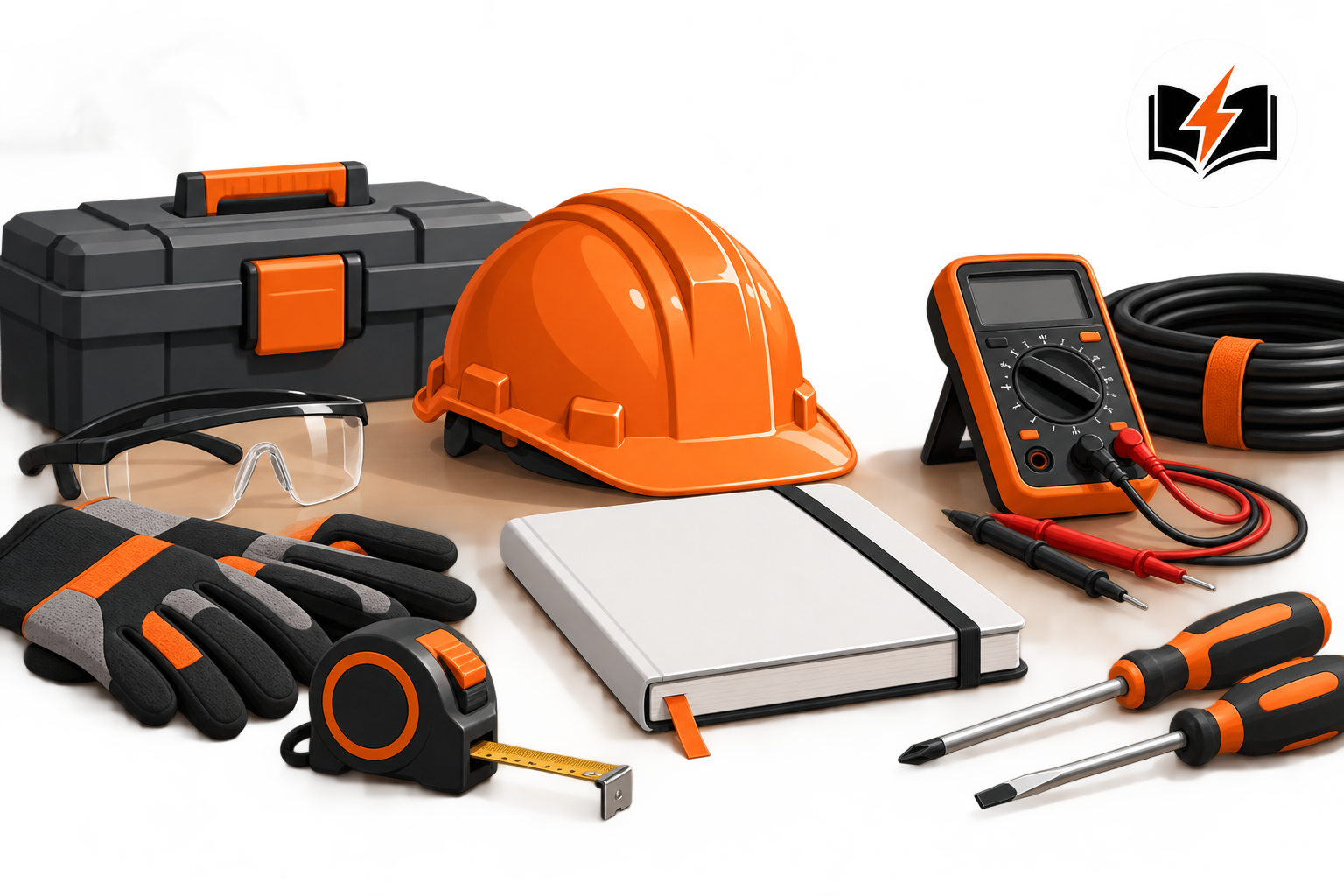
Start with your employer’s written list
Ask for the required apprentice tool list before buying a large kit. Employers and training programs differ in what they supply and what they expect you to bring. Ask about tool replacement, storage, identification, and battery-platform preferences. The list below is a planning example, not a universal requirement or a product endorsement. Buy the items required for your first assignments, then expand as the work demands.
Measuring and marking
Common starter items include a tape measure, a small level, pencils or approved markers, and a notebook. Learn to read fractions accurately and record units beside measurements. Choose tools you can handle comfortably and keep them organized so that checking a dimension is convenient. A clear sketch with labeled measurements is more useful than trying to remember a layout from a conversation.
Hand tools for assigned installation work
A typical employer list may include lineman’s pliers, diagonal cutters, long-nose pliers, wire strippers suited to the assigned conductor sizes, screwdrivers or a multi-bit driver, nut drivers, and tongue-and-groove pliers. A tool pouch or bag helps keep the kit together. Ask before purchasing specialty cutters, knockout equipment, benders, or power tools. Learn each tool’s limitations and inspect it before use. Ordinary cushioned handles do not make a tool electrically insulated.
Test instruments require training
Do not choose a meter only by price or assume owning one makes you qualified to test a circuit. Your employer should identify the instruments, ratings, leads, procedures, and training required for the work. A noncontact voltage indicator is not a substitute for an approved absence-of-voltage verification procedure. Testing and verification belong with appropriately trained and authorized personnel. Ask your supervisor what you need before buying test equipment.
Plan for protection and maintenance
Confirm the required footwear, eye protection, head protection, gloves, and other protective equipment with your employer. Ask what is provided and what you must obtain; requirements depend on the hazards and applicable rules. Keep cutting edges and tips in good condition, remove damaged tools from use, and store the kit dry and secure. Spend a few minutes at the end of each day returning tools to their place so you can identify missing or damaged items before the next shift.